A Smarter Future for Water: Fairfield, Ohio’s AMI Transformation
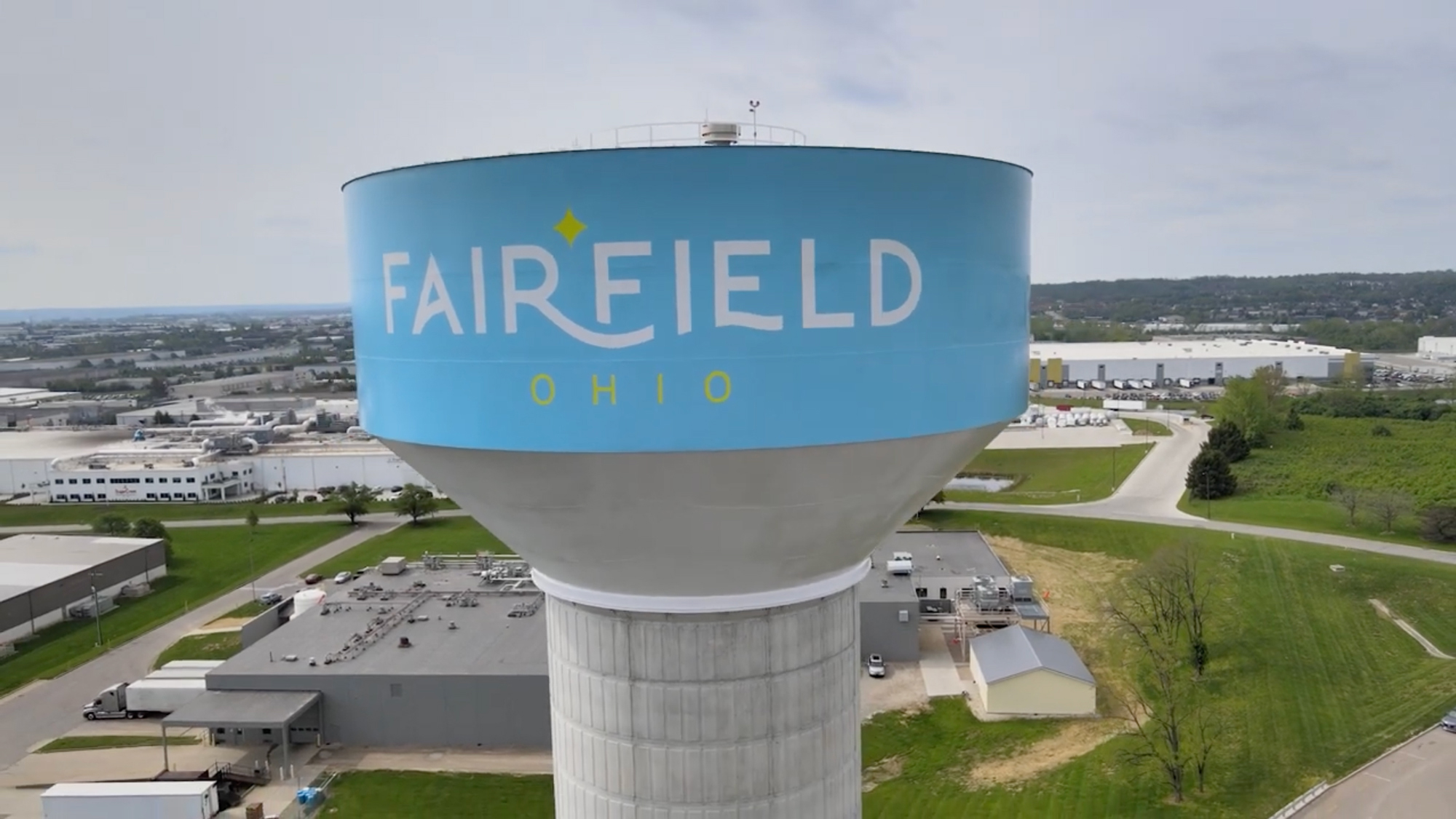
The city of Fairfield, Ohio, chose Ferguson Waterworks, a utility meter distributor, to upgrade its manual-read meters with an advanced metering infrastructure. Our expertise, project management, and integration support ensured a smooth and effective transition. Now, the city is seeing an additional $800,000 per year in revenue directly related to the AMI integration.
In Fairfield, Ohio, a city of 45,000 residents just north of Cincinnati, water is a vital resource. It quietly supports every household, business, and service across the community. But as the city grew and its infrastructure aged, leaders recognized the need for a citywide meter replacement initiative. Teaming up with Ferguson Waterworks as their utility meter distributor and project partner, the advanced metering infrastructure helped reduce non-revenue water by 13%, increase meter accuracy by 5-10%, and is projected to save $800,000 per year in revenue.
When does a city need to upgrade its meters?
Adam Sackenheim, Fairfield’s Assistant City Manager, stated: “Our old meter system was about 25 years old. The meters were out of warranty. We had concerns with their accuracy, and we were also still manually reading all 14,000 meters each month.” For them, it was time for a city-wide meter upgrade.
Does manual meter reading cost utilities more money?
For years, Fairfield’s water department relied on manual meter reading to gather usage data. Three employees were dedicated full-time to reading meters across the city, and inefficiencies were piling up. Missed reads, delayed data, and escalating maintenance costs made it increasingly clear that the system was no longer sustainable.
Does manual meter reading impact customer satisfaction?
Fairfield residents were starting to feel the pitfalls of manual meter reading, too. They asked more questions about their usage, their bills, and how the city was managing a resource as essential as water. City staff wanted to be able to answer with more than just estimates and retroactive statements. They needed data, accuracy, and transparency.
That realization kicked off Fairfield’s journey toward advanced metering infrastructure (AMI), a bold shift to a modern metering system that would ultimately transform how the city managed water from the ground up.
How to select the best AMI system for a utility?
As the need for change became more evident, city leadership took a collaborative, thoughtful approach to selecting a new system. Working in partnership with Ferguson Waterworks, the team evaluated vendors and focused on choosing a technology that could support their long-term goals.
Why did Fairfield choose Ferguson Waterworks as their utility meter distributor?
This wasn’t Fairfield’s first experience with Ferguson Waterworks. Their relationship began in 2017 with the installation of a single 4″ Octave Ultrasonic meter from Master Meter, which fit well with the city’s existing automatic meter reading (AMR) system. This initial step showcased Ferguson Waterworks’ dependability and metering expertise as a utility meter distributor. Ultimately, setting the foundation for a strong and trusted partnership. That is why Ferguson Waterworks was chosen to play a pivotal role in supporting Fairfield’s transition to AMI.
What makes Ferguson Waterworks a valuable utility infrastructure partner?
Ferguson Waterworks leverages its unique position as both a leading utility meter distributor and a capable prime contractor. As a result, we provide turnkey metering solutions. The One Utility team from Ferguson worked closely with city leadership from product selection to project management and integration, ensuring a smooth and effective implementation, addressing challenges, and fostering confidence throughout the process.
What meter brand was chosen for citywide AMI integration?
With Ferguson’s guidance, the city ultimately selected Master Meter’s brass body MultiJet for 5/8″ through 1 1/2″ meters and the Octave ultrasonic for 2″ through 12″ meters. They coupled this with Harmony, Master Meter’s cloud-based analytics portal, and the customer-facing My Water Advisor app. These components allowed for automated collection of water usage data, real-time leak detection, and detailed reporting—a level of visibility and control that simply hadn’t been possible before.
Does Ferguson Waterworks offer a Proof of Concept trial before installing all the wireless utility meters?
Absolutely. Before launching the full citywide rollout, Ferguson Waterworks proposed and implemented two Proof of Concept (POC) projects. These demonstrations involved the installation of approximately 1,000 pit meters by the city of Fairfield.
“We had our employees physically install the first thousand new meters in our system so that they could understand the technology, the programming provisions, and really just understand the hardware and get comfortable with it,” said Sackenheim.
The successful execution of these POC projects not only validated the advanced capabilities of the metering technology but also demonstrated Ferguson’s ability to deliver a comprehensive turnkey metering solution. This gave Fairfield the confidence to proceed with the full implementation.
How did early success speed up the meter implementation timeline?
The city had planned to phase in the AMI technology over five years. But after the two successful pilots, plans changed.
“Our city council actually said, ‘Don’t wait. Let’s go ahead and advance this as quickly as possible,’ which we did,” Sackenheim recalled.
City Councilman Tim Meyers commented on the decision.
“We’re able to get data and analytics that allow us to better produce water for our residents and business owners. That product has to be perfect in my mind. I think all of this technology helps with that.”
After receiving approval from the city, Ferguson Waterworks was entrusted to complete the full AMI deployment. This included installing over 13,000 additional meters throughout Fairfield. Our dedicated Project Management and Intelligent Utility Solutions teams worked to ensure seamless execution and AMI integration. Installation began in June 2022 and was substantially complete by October 2022.
What benefits did the new advanced metering infrastructure provide Fairfield and its residents?
With the new system in place, the city experienced immediate benefits. The city was no longer spending hours or days on manual meter reading. Matt Young, Fairfield’s Superintendent of Public Works, explained:
“It has been a night and day change for us. Our previous method required three meter readers daily to collect data manually. The new system eliminated that need.”
With the AMI system automatically delivering timely and accurate meter reads to the Harmony platform, processes such as read-ins and read-outs, which had once been labor-intensive, are now streamlined, saving significant time and effort.
“What we have been able to do with the new smart metering system is eliminate about 2,500 work orders per year, which is significant to us. That’s 2,500 truck rolls, 2,500 plus man-hours of work time that we have been able to redirect”, said Sackenheim.
With the increased bandwidth of field technicians, Fairfield has reallocated staff toward proactive tasks such as valve turning and hydrant flushing, as well as much-needed maintenance and repair of water mains.
“Having that additional staff to be able to make sure our customers have water when they need it is really important to us,” said Young.
What efficiencies did the AMI system provide for the utility?
Fairfield’s efficiency gains have gone far beyond labor savings. The ability to capture low-flow data from the meters means the city is finding leaks that would’ve gone unnoticed before. “We have historically struggled with lost water,” said Sackenheim, noting that the city’s non-revenue water (water that has been treated but lost to leaks in the distribution system) had been in the range of 20 to 22 percent. By comparison, “the industry target is 12 percent or less,” he explained. However, after a full year of having the AMI system online, Fairfield’s non-revenue water losses were reduced to 13 percent. “[That’s] a drastic decrease in lost water, which corresponds also to a drastic increase in additional revenue,” he said.
The city had initially projected a modest 3% improvement in meter accuracy with the new system. “In fact, based on the first two years of having the system online, we believe the increased accuracy is more in the 5 to 10% range,” Sackenheim said.
“Conservatively, we believe we are seeing an additional $800,000 per year in revenue directly related to the installation of these new meters throughout the city.”
As a result, the projected return on investment timeline was reduced from 8–10 years to just 5–7 years, well within the system’s 20-year warranty period. The increased revenue has not only allowed Fairfield to bolster its cash reserves but also to fund critical infrastructure projects, such as water main replacements, further enhancing the city’s resilience and service capabilities.
Master Meter’s Harmony system helps detect water leaks faster and improves customer satisfaction.
In addition to operational and labor efficiencies, the new technology offered much-needed improvements in customer service. Christine Roach, who was Fairfield’s billing clerk prior to the AMI transition, welcomed the changes.
“We had a lot of problems with our software [before the upgrade],” she recalled. After the manual meter reads had been collected, Roach and her team would upload them from the handheld collectors to the system. “Some of the readings would be missing digits—and a lot of times, they couldn’t get a reading at all,” she said. That would result in sending staff back out to get a reading or having to estimate reads, which caused complications for customers, “especially in the summer months when the water usage can fluctuate so much,” she added.
If a customer called to inquire about a high bill, staff were at a loss to pinpoint the cause or when it started. “In the past, we had up to a 45-day resolution with meter reading,” Young explained. Between the time of a read and receiving a bill, a customer could have had a leak for six weeks without realizing it.
Now, hourly reads come into the Harmony system twice per day. “That real-time data is huge for us,” Young said. If an account shows unusual or excessive water consumption, Fairfield knows about it—and can proactively alert customers.
“I really like the leak alerts,” Roach agreed. “We’re able to notify the customers if there could be a leak at their address. It’s very accurate.” Using the consumption data and graphs available in Harmony, Roach and her team can usually determine what type of leak the customer may have and provide guidance on how to fix it.
“We have gotten a lot of positive feedback from our customers,” Roach said. “They’re impressed that we’re able to see that they have a leak within about an hour of when it occurs. They’re very grateful that we’ve contacted them and let them know.”
If a customer calls about a high bill, Roach and her team are better prepared to answer questions. “We’re able to get readings as we’re on the phone with the customer,” she explained. “If a customer is calling saying, ‘Hey, my usage has been a lot higher this month. What’s going on? We’re able to pull up the software and look at the actual read in real time.”
Is the My Water Advisor App worth it?
Absolutely. With the My Water Advisor app and portal, customers can track daily water consumption and set notifications to alert them if usage exceeds a specific threshold. That includes not only residents and local businesses, but also large industrial users whose consumption is often more variable.
“We’ve had businesses that saw spikes in their usage and didn’t know why,” said Roach. But now, with the My Water Advisor consumer portal, “they can see exactly when and where it happened,” she explained.
It has become a powerful resource that customers really appreciate. “It helps them save money because they’re conserving water,” Roach said. “And they’ll have a good idea of what their bill is going to be towards the end of the month.”
As an added benefit, the new system enables Roach and her team to manage their workflow more efficiently. With move-outs, for example, “we don’t have to create service orders right away to be able to get readings,” she explained. “We can do those later in the week [when it’s less busy].” Work can be distributed more evenly, which reduces stress on employees. “We’re able to focus on what’s important,” she noted, “and that allows us to provide better customer service.”
AMI brings security and peace of mind to Fairfield.
Fairfield’s AMI upgrade has delivered far more than meter replacements—it has transformed how the city manages water. Through strong leadership, staff engagement, and collaboration with Ferguson Waterworks, Fairfield has implemented a system that benefits everyone—from utility crews and billing staff to customers and businesses.
Ferguson’s intelligent utility solutions bring accurate data, operational efficiency, and real-time insights. As a result, the city is better positioned to serve its residents, conserve resources, and plan for the future. And while the project’s measurable results—like labor savings, reduced water loss, and increased revenue—are impressive on their own, the greatest impact may be in the improved service and peace of mind it brings to the people of Fairfield.
Fairfield’s journey demonstrates what’s possible when vision, collaboration, and the right technology come together. With AMI in place, the city isn’t just managing water—it’s building a smarter, more resilient future.
View Similar Case Studies
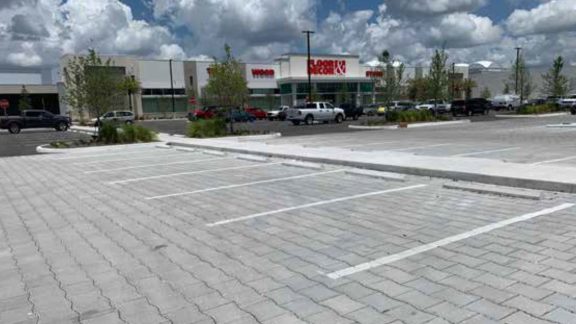
In order to revitalize and meet stormwater codes, the abandoned parking area at the Shoppes at Fashion Square in Orlando, FL, required updates. With a permeable paving system and machine technology, we helped the client achieve their goals, save $1 million, and complete the project in just 10 days.
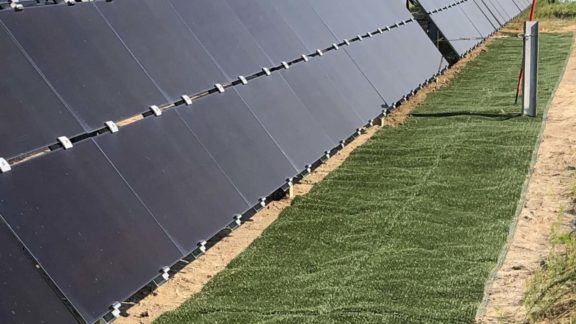
With solar panels in place and operational, an immediate and effective erosion control solution was imperative. Especially considering the panels were positioned next to channels, drip lines, and spillways.
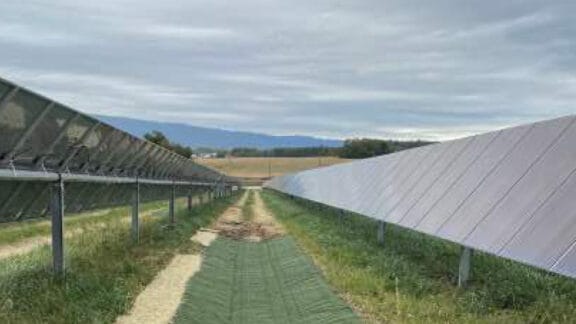
After failed attempts to stabilize the earth at the Mt. Jackson Solar Farm, they required an immediate, cost-effective erosion control solution. Ferguson Waterworks was brought on board to address their ongoing concerns.